





Subscribe to our newsletter!
Follow the latest news from CATALIS and Clinical Trials Quebec


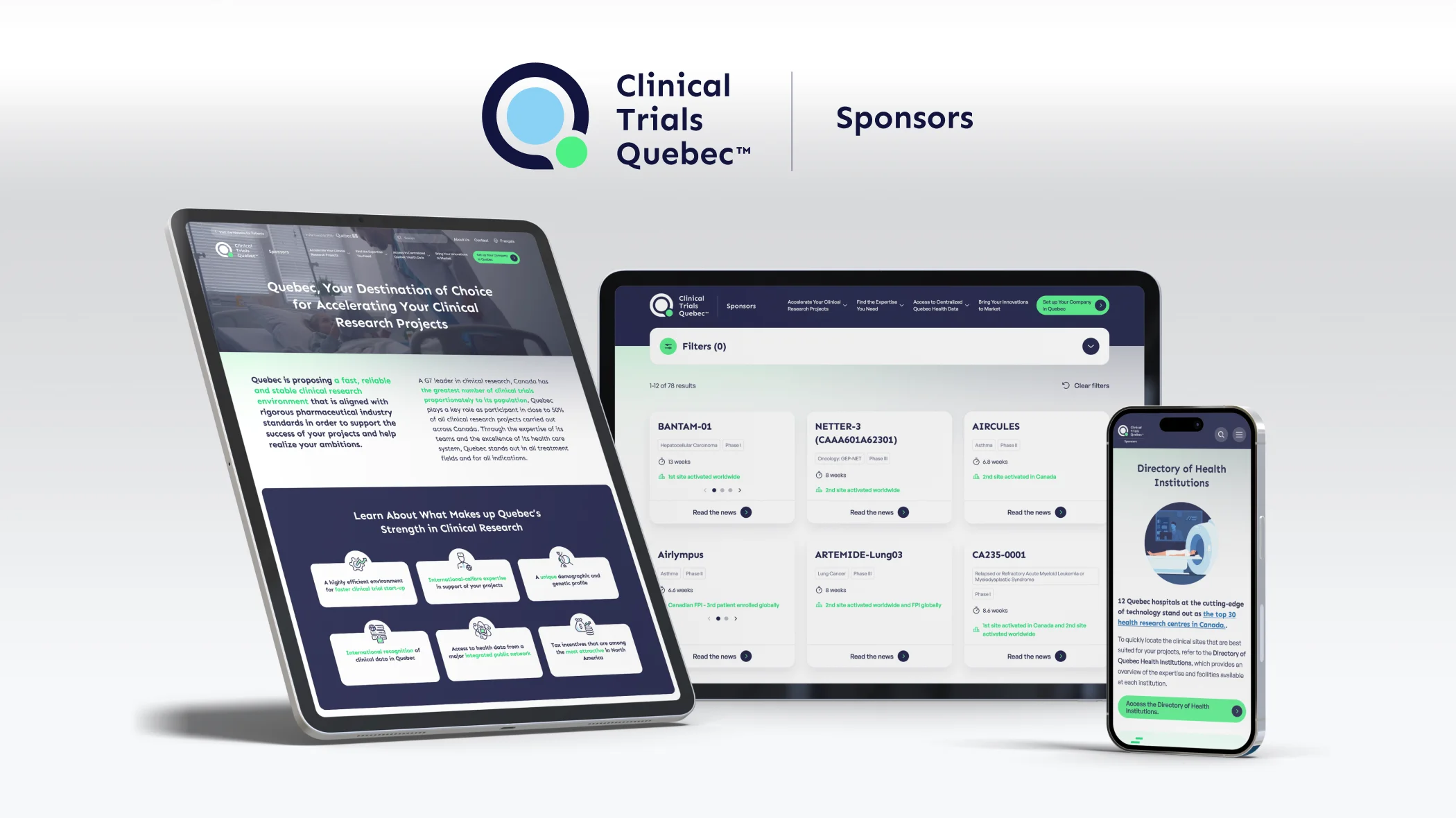
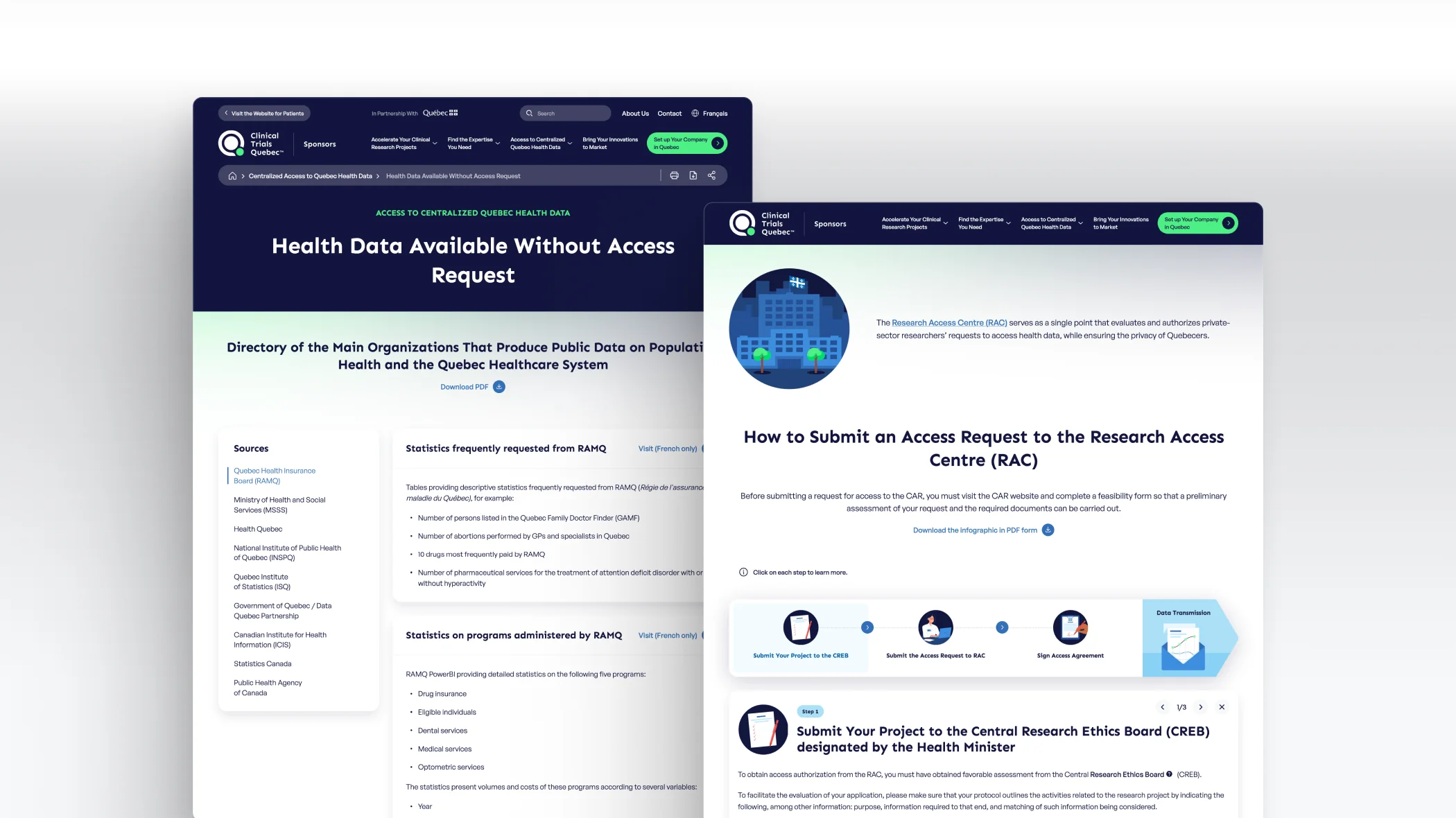
Developed by CATALIS Quebec and backed by the Government of Quebec, the Clinical Trials Quebec website is an information and support hub aimed at providing sponsors with the tools and resources they need to optimize the planning and execution of their clinical research projects in Quebec.
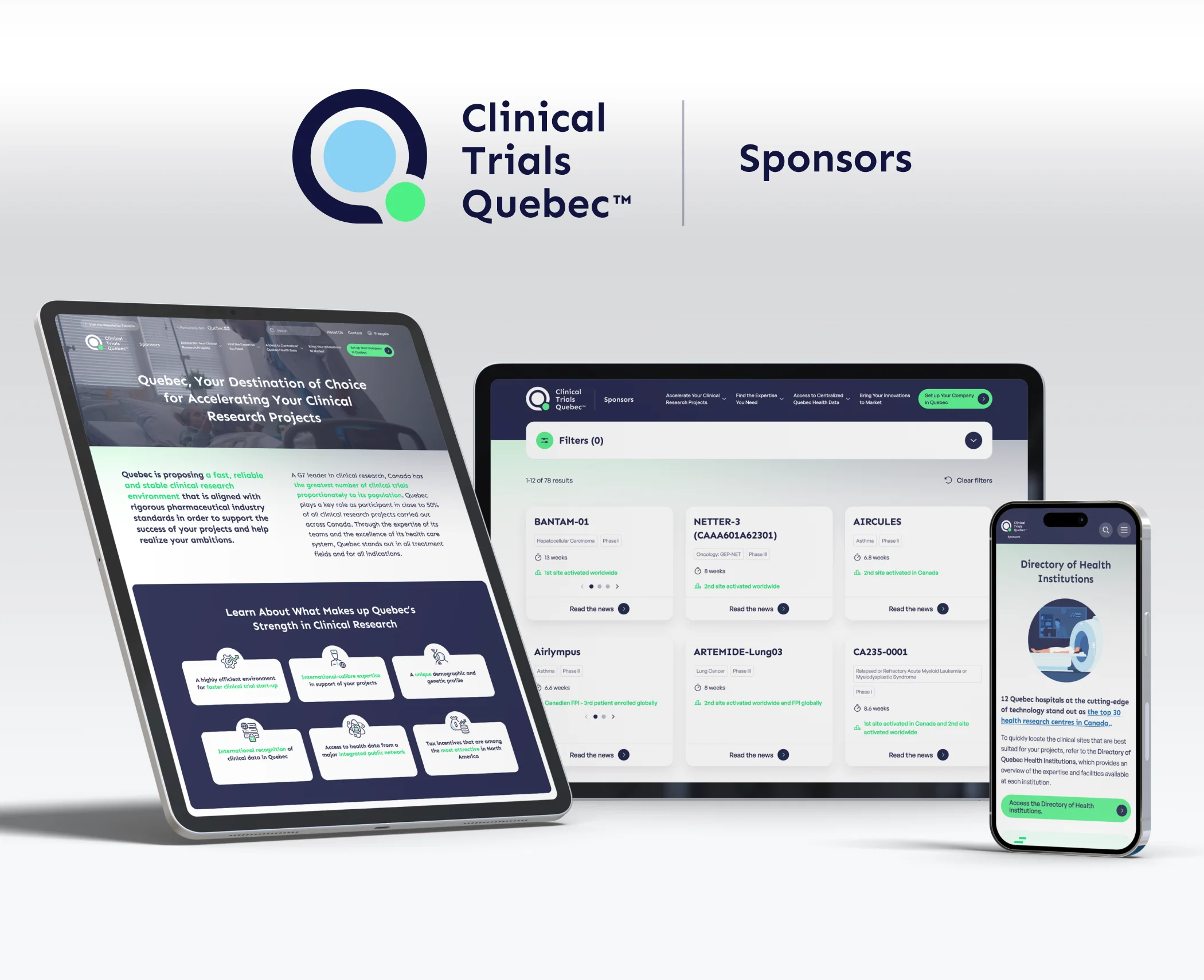
It enables users to identify the sites most suitable for carrying out specific clinical trials, thus supporting faster, efficient and collaborative research in service of health.
This directory lists the private clinics available for conducting your clinical trials in Quebec.
This directory allows users to quickly find suppliers specialized in clinical research and in biopharmaceutical development across Quebec.
We would like to thank BioQuébec for its invaluable contribution in developing this provincial directory.
This directory lists the patient organizations, treatment guidelines, and patient-partner services to assist you at each step of the process.
We would like to thank our patient-partner organizations for their invaluable contribution in including treatment guidelines in the directory.
Quebec’s Public Clinical Trials Database—developed by SemiWeb via the Nagano platform—enables you to find past, ongoing and upcoming clinical trials in Quebec, Canada, and around the world. The Database compiles and shares, in real time, sponsor data from ClinicalTrials.gov (an international public directory) and the data from the Nagano platform taken from public institutions that are part of the Quebec health and social services network.
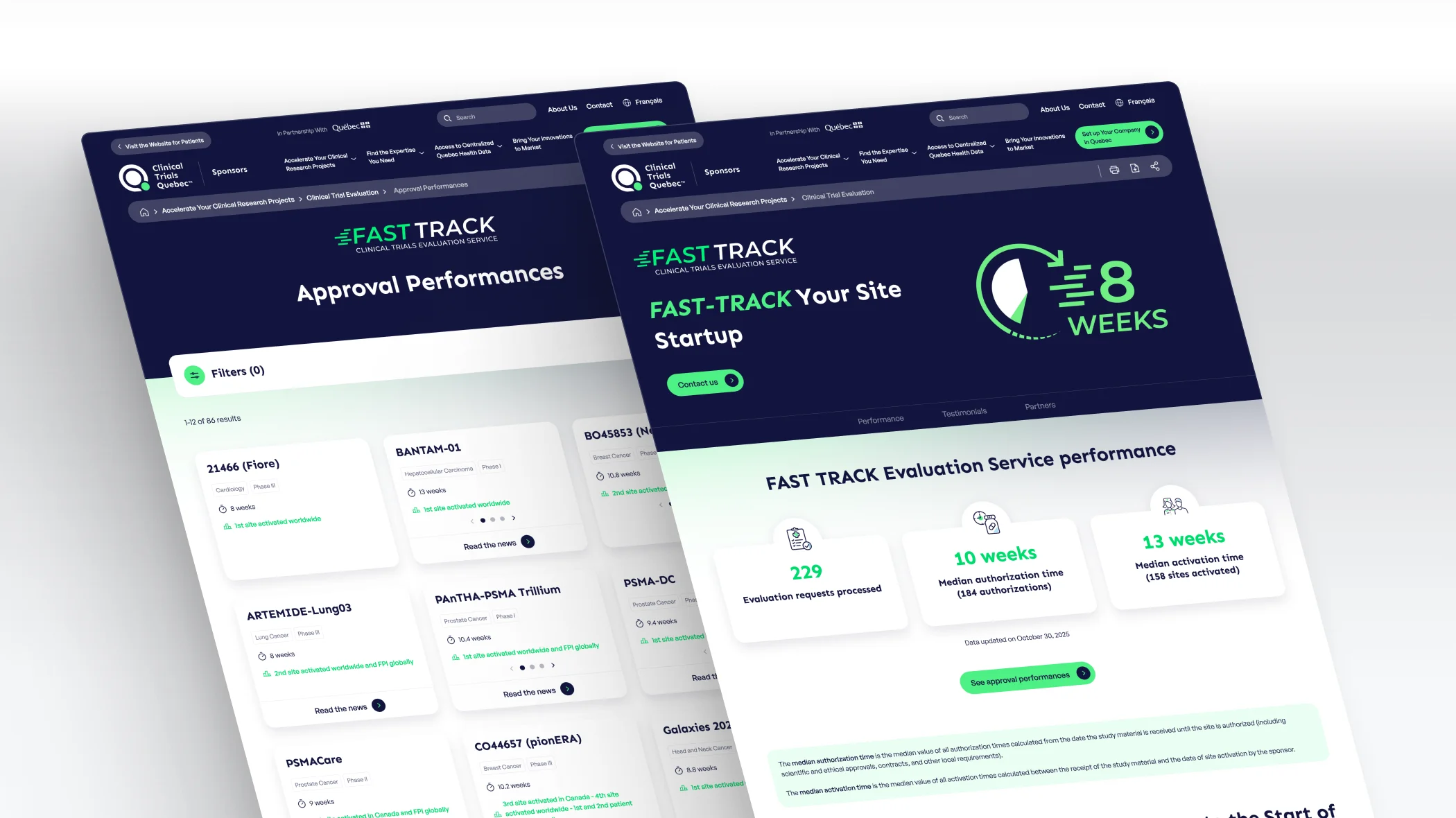
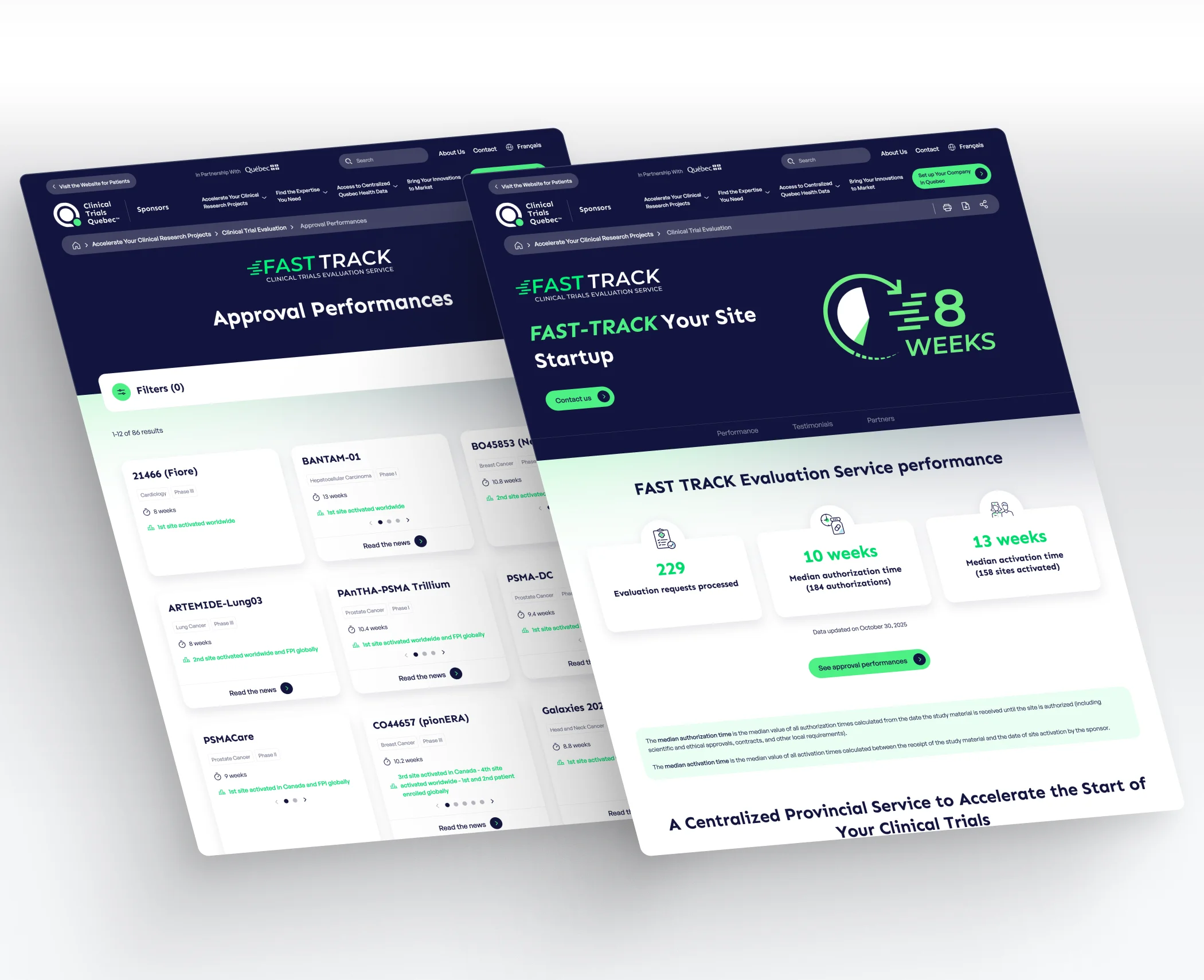
The FAST TRACK Evaluation Service is a unique initiative that positions Quebec as a world leader in clinical research. Its aim is to have clinical trials approved in no more than eight weeks—almost 75% faster than the standard approval time—, thus leaving more time for participant recruitment.


This document provides additional details on the new elements and changes introduced in Revision 3 (R3) of the International Council for Harmonisation (ICH) Good Clinical Practices (GCP).
 Download
This memo, developed by the CATALIS Network, clarifies the requirements for signing Form FDA 1572 in Quebec with respect to clinical trials.
Download The memo, developed by the CATALIS Network, clarifies Canadian and Quebec requirements under Regulation (EU) No. 536/2014with respect to the conduct of clinical trials in Quebec institutions.
Download The standard clauses include information that must be found in the information and consent forms (ICFs) to comply with the standardization and regulatory requirements in effect in Quebec when carrying out clinical trials. This standardization stems from a consensus of the Research Ethics Boards (REB) of Santé Québec institutions that are members of the CATALIS QUEBEC Network in order to ensure decision-making consistency across the network.
The other harmonized clauses propose common wording used by REBs, in particular in relation to:
Their use in clinical trial consent forms facilitates the drafting of these documents and fast tracks their approval by the institutions part of the health and social services network.
Standard REB clauses in Santé Québec institutions Other harmonized clauses This statement developed by the CATALIS Network and released by the Ministère de la Santé et des Services sociaux confirms the regulatory requirements applicable to institutions part of the health and social services network, as well as the new provisions of the Charter of the French Language.
Download The Provincial Model Confidentiality Agreement developed by the CATALIS Network and released by the Ministère de la santé et des services sociaux is recommended to expedite the signing of confidentiality agreements between sponsors and institutions part of the healthcare system. If a sponsor submits this contract in its original form without any modifications, public health institutions in Quebec will accept it as is.
The Pan-Canadian Model Clinical Trial Agreement was developed based on the pan-Canadian model of the Canadian Clinical Trials Coordinating Centre (CCTCC) which the CATALIS Network adapted to the Quebec regulatory context. The provincial mCTA was released by the Ministère de la santé et des services sociaux to expedite the signing of clinical trial agreements between sponsors and institutions part of the healthcare system. If a sponsor submits that mCTA in its original form without any modifications, public health institutions in Quebec will accept it as is.
This document drawn up by the CATALIS Network defines criteria for determining which drugs and procedures can be considered “direct research costs.” Its purpose is to support budget negotiations by providing a shared evaluation framework.
Download This memo drawn up by the CATALIS Network clarifies the stakeholders’ responsibilities with respect to activities carried out in participants’ homes.
Download This document drawn up by the CATALIS Network clarifies the impact of the merger of health and social services institutions resulting from the creation of Santé Québec on the negotiation, conclusion and signing of new contracts. It also clarifies the naming of institutions, as approved by Santé Québec, which must be used in all agreements signed since December 1, 2024.
Download This document is intended to support sponsors and healthcare institutions within Quebec’s health and social services network in the use of software and other technologies in clinical trials. It outlines the applicable responsibilities, clarifies legal and contractual obligations, and provides recommendations to help adapt and standardize contractual practices.
Download This questionnaire drawn up by the CATALIS Network was designed to expedite the authorization of a research project by providing the research pharmacy with the detailed information needed for its feasibility assessment, in addition to the study documents. It must be completed by the sponsor and submitted by the research teams for evaluation.
DownloadDid you know that Quebec health institutions have access to many N2 training courses?
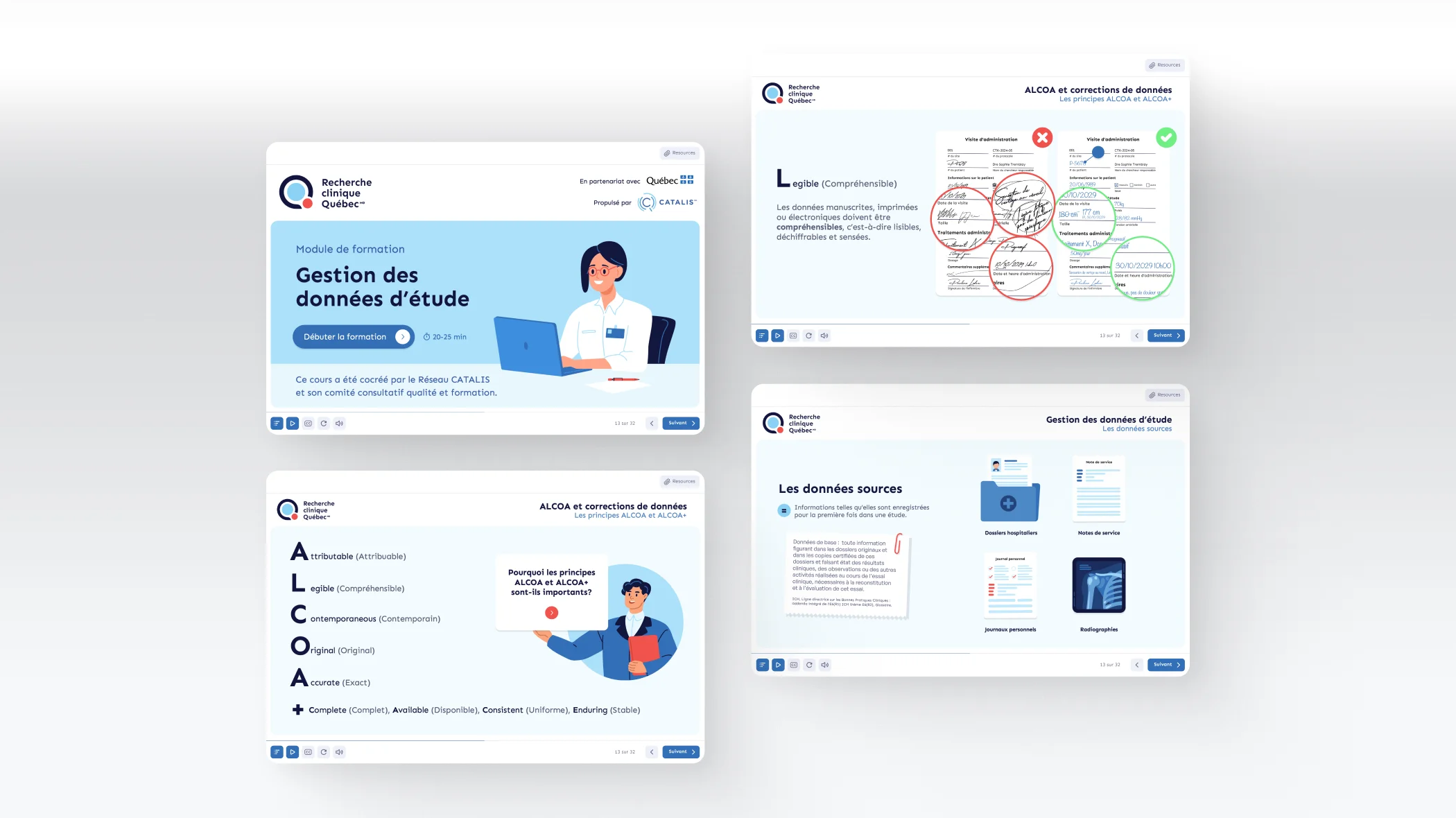
Did you know that Quebec health institutions have access to many training courses provided by Clinical Trials Quebec?
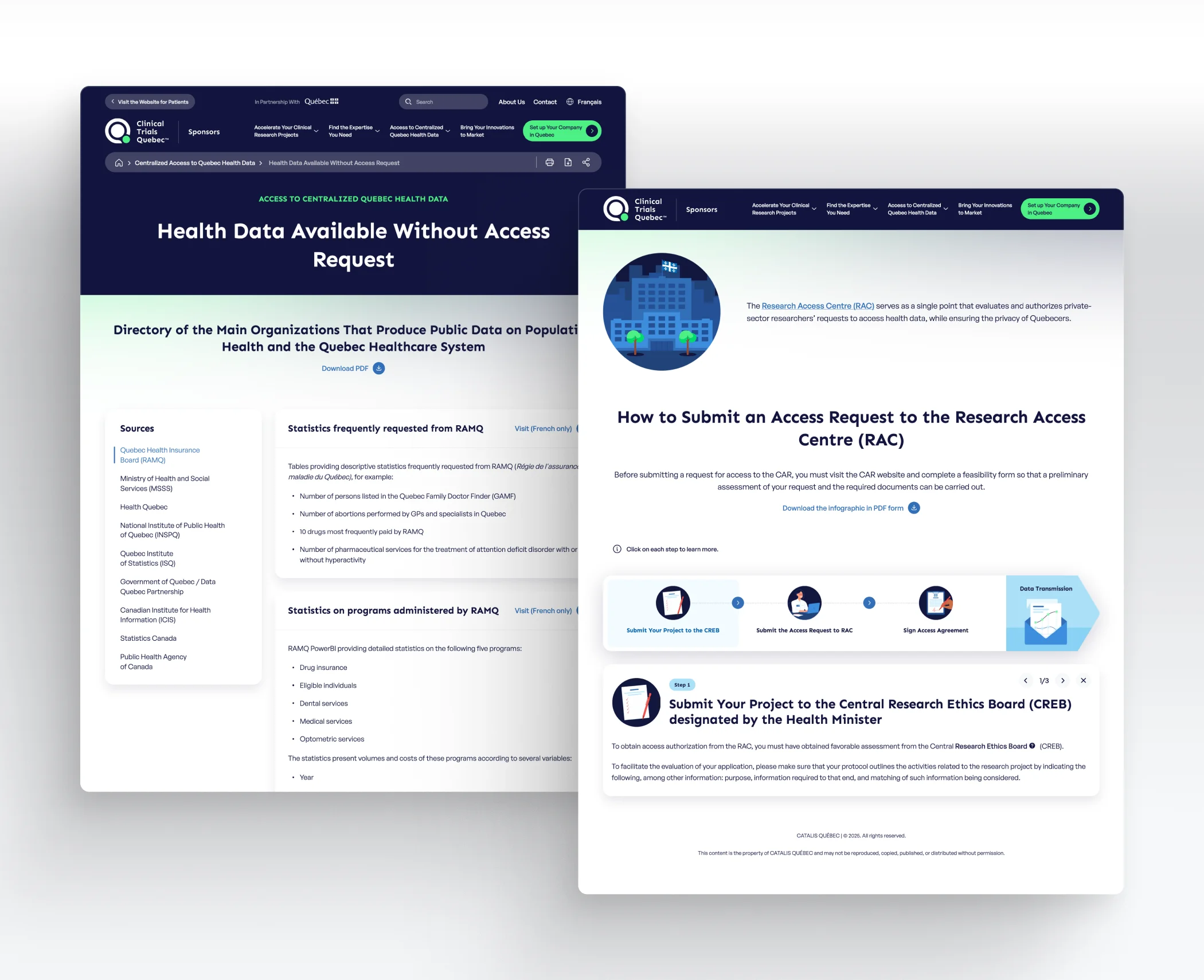
Through its universal public healthcare system, Quebec collects massive public health data covering medical procedures, hospitalizations, drugs, and lab or MRI results. Some anonymized health data are accessible to the public, while other data require an access request.
Seven of the 10 largest pharmaceutical companies in the world—AbbVie, Pfizer, Merck, Novartis, Roche, GSK and Bristol Myers Squibb—have set up their business operations in Quebec, which shows the excellence of its business landscape and the strength of its networking between industry, research and innovation.


Follow the latest news from CATALIS and Clinical Trials Quebec

