

Institut de Cardiologie de Montréal recruits the world’s first participant in a Novartis cardiology study
The Institut de Cardiologie de Montréal (ICM – Montreal Heart Institute) has recruited the world’s first participant for the Novartis phase IIa study CPKN605A12201 on atrial fibrillation. Through the FAST TRACK Evaluation Service, and under the leadership of Dr. Laurent Macle and his team, the ICM obtained a 10.8 week authorization time and a total activation time of 12.4 weeks.
The FAST TRACK Evaluation Service has also enabled four other Quebec health institutions to authorize the study quickly, with a median time of 11.3 weeks: the Centre hospitalier de l’Université de Montréal (CHUM), the Centre hospitalier universitaire de Sherbrooke (CHUS), the Centre universitaire de santé McGill (MUHC) and the Institut universitaire de cardiologie et de pneumologie de Québec (IUCPQ).
This collective performance confirms Quebec’s leadership in the rapid implementation of world-class clinical trials in its health institutions, for the benefit of patients.
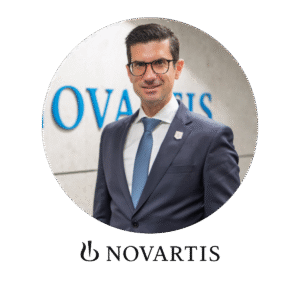
“We are proud to have activated this trial under short timelines and to see the Montreal Heart Institute recruit the first participant globally, right here in Quebec. At Novartis, we are constantly looking for ways to help scientific innovation reach patients faster. This milestone is a strong example of that commitment.”– Dimitri Gitas, Country President, Novartis Canada
“We are proud to have recruited the first patient in this atrial fibrillation treatment study. The FAST TRACK Evaluation Service and the support of CATALIS have enabled us to move forward quickly on this important study.” – Laurent Macle MD, a cardiologist-electrophysiologist and clinical researcher at the Montreal Heart Institute, a clinical tenured Professor of Medicine at the Université de Montréal

“Clinical research is critical in advancing health care and improving the lives of our patients. By working together with our researchers, clinical and industry partners, we are bringing world-class innovations directly to our patients. This collective effort strengthens our health system and promotes continuous improvement in the quality of care at the ICM.” – Cinzia Raponi, Assistant Director, Administrative Affairs Research Centre, Montreal Heart Institute

Quebec at the forefront of atrial fibrillation innovation
Quebec is emerging as a centre of excellence in atrial fibrillation clinical research, thanks to its world-class physicians and researchers.
At the ICM, the reference centre for complex arrhythmias, Dr. Laurent Macle, a member of the electrophysiology department, is developing new strategies for catheter ablation.
At the CHUS, Dr. Jean-François Roux and his team were the first in Quebec to use a new electroporation technology.
This momentum continues at the CHUM, where Dr. Benoît Coutu is actively involved in world-class clinical research projects, facilitated by the cutting-edge facilities and technical platforms of the Cardiovascular Centre.
At the IUCPQ, Dr. Jean-François Sarrazin has set a Canadian record by using Farapulse, an electroporation ablation technology, representing a major breakthrough for patients in Quebec.
Finally, at the MUHC, Dr. Atul Verma, Director of the Division of Cardiology, is leading international studies that are redefining clinical practices, such as his research on stopping anticoagulants after ablation.
A promising treatment for atrial fibrillation
The purpose of the CPKN605A12201 study, conducted by Novartis, is to evaluate the efficacy, safety, tolerability and pharmacokinetics of a new treatment to reduce atrial fibrillation burden in individuals with atrial fibrillation.
Atrial fibrillation is a common arrhythmia that affects approximately 350,000 people in Canada, and its incidence doubles every decade after age 551. It is characterized by the chaotic contraction of the atria, the upper chambers of the heart that receive blood and trigger the heartbeat. These irregular contractions cause palpitations, fatigue, shortness of breath, and increase the risk of stroke. Each year, more than 62,000 people in Canada suffer from stroke, with one in four being linked to atrial fibrillation, often among the most severe cases.1
Current treatments, which mainly include anti-arrhythmic drugs, attempt to slow down the heart rate or restore a normal heart rate. These drugs act as regulators of electrical current, by slowing down certain cardiac signals. However, their efficacy varies, sometimes they can cause severe side effects, and episodes of fibrillation can reoccur. There is therefore an active search for new therapeutic approaches.
The Novartis study is testing an innovative treatment that could stabilize the heart rate, reduce episodes of fibrillation and protect the atria over the long term. It works by blocking a regulatory system inside the heart cells, improving their structure and the organization of the transmission of electrical signals. By lengthening the time before the next contraction and enhancing cell stability, this treatment works upstream of electrical disruption in a reversible way, unlike traditional anti-arrhythmia treatments. This approach has the potential to be more efficacious in the long term while having fewer side effects. The Novartis study plans to recruit 165 patients worldwide, including five from each of the five participating Quebec health institutions.
Are you interested in participating in this clinical trial or in other clinical trials in cardiology? We offer a free Personalized Support Service to help guide you in your search for clinical trials. You can also access Clinical Trials Quebec’s information and services hub. This site contains easy-to-understand educational content, animated infographics, and free tools which will help you to better understand clinical research and what happens during a clinical trial. Information on Novartis CPKN605A12201 clinical study is available through Quebec Health Research’s Public Clinical Trials Registry and the www.clinicaltrials.gov website.
The CATALIS Network Is Committed to Accelerating Access to Innovative Treatments Through its FAST TRACK Evaluation Service
Thanks to the commitment of healthcare institutions such as the ICM, the CHUS, the CHUM, the IUCPQ and the MUHC, and pharmaceutical companies such as Novartis, CATALIS and its Network of Partners are delighted to stimulate innovation in clinical research and reduce clinical trials’ authorization times by nearly 75%, with the goal of accelerating the development of innovative treatments that improve the lives of patients in Quebec.
CATALIS would like to thank all its public and private partners for their trust, their participation in developing innovative clinical research approval methods, and their commitment to implementing accelerated clinical trials in their institutions.
If you would like more information about the FAST TRACK Evaluation Service, please write to us at: info@catalisquebec.com.
1Canadian Cardiovascular Society. 2020 Atrial Fibrillation. Chapter 2 — Epidemiology. Disponible : https://ccs.ca/guideline/2020-atrial-fibrillation/chapter-2-epidemiology/


